National Second Prize
China Collegiate Computing Contest
Mobile Application Innovation Competition
Interaction Design, Affective Computing, Sound, Spatial Interfaces, App Development
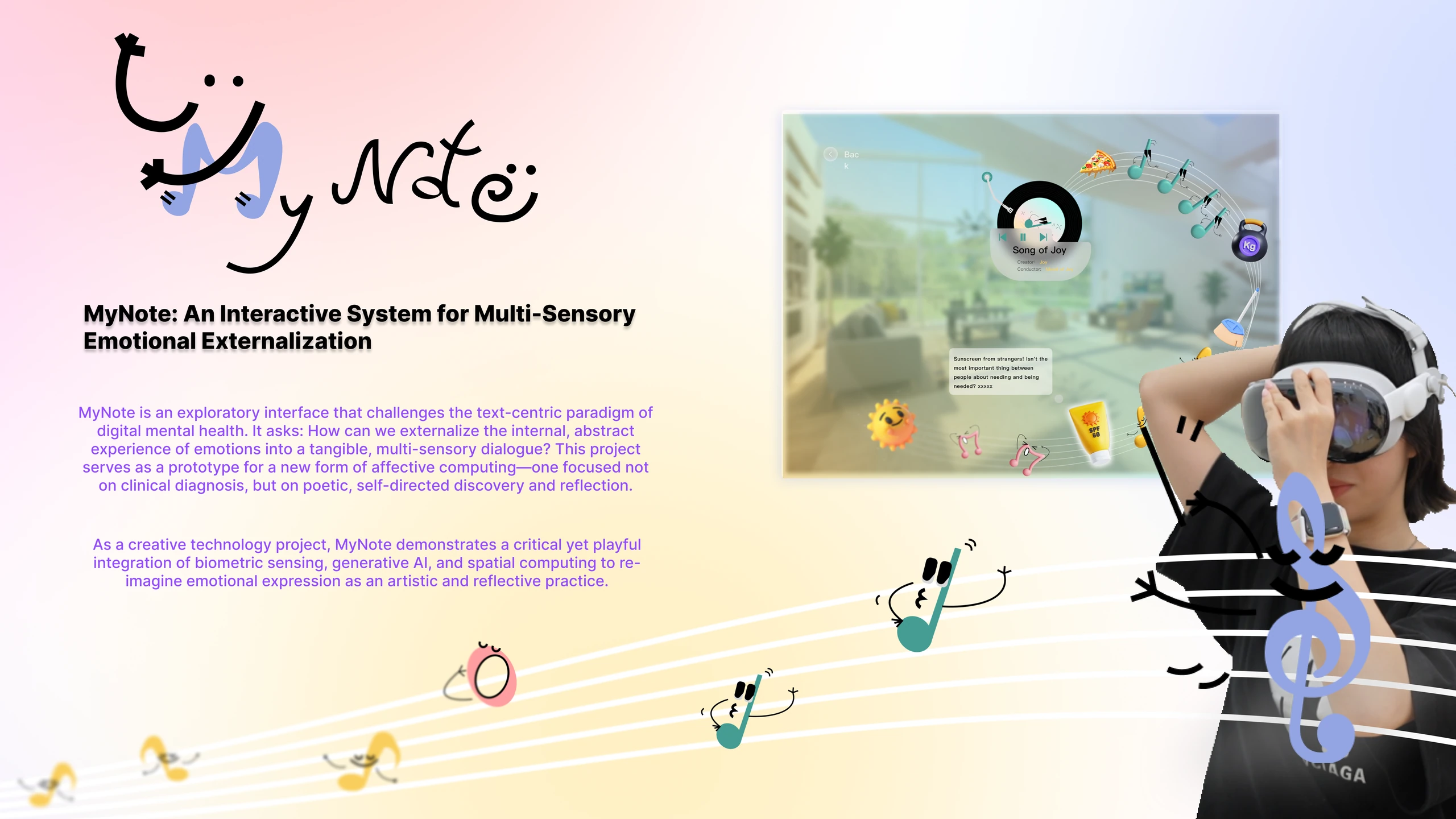
01 / The proposition
MyNote explores emotional expression through sound, musical characters, and spatial interaction. A feeling becomes something to listen to, look at, and revisit.
I led the concept and contributed research, product analysis, UI/UX, visual materials, and front-end design within a three-person team. We refined the experience through mentor feedback and distributed the application through TestFlight.
A gentle check-in opens a personal conversation.
Musical and visual responses give a feeling a sensory form.
A personal score and emotional traces create continuity over time.
02 / Research & framing
The research considers the gap between digital connection and the ability to communicate an internal experience. Emotional granularity, affective interaction, and calm technology informed a system with several expressive channels.
Three principles emerged: make expression tangible, connect sensory modes, and preserve room for a person’s own interpretation.
03 / A closer look at the interaction
Mood recording, musical response, immersive listening, and emotional history belong to one connected journey. Each representation offers a way to reflect; the person remains the authority on what their experience means.
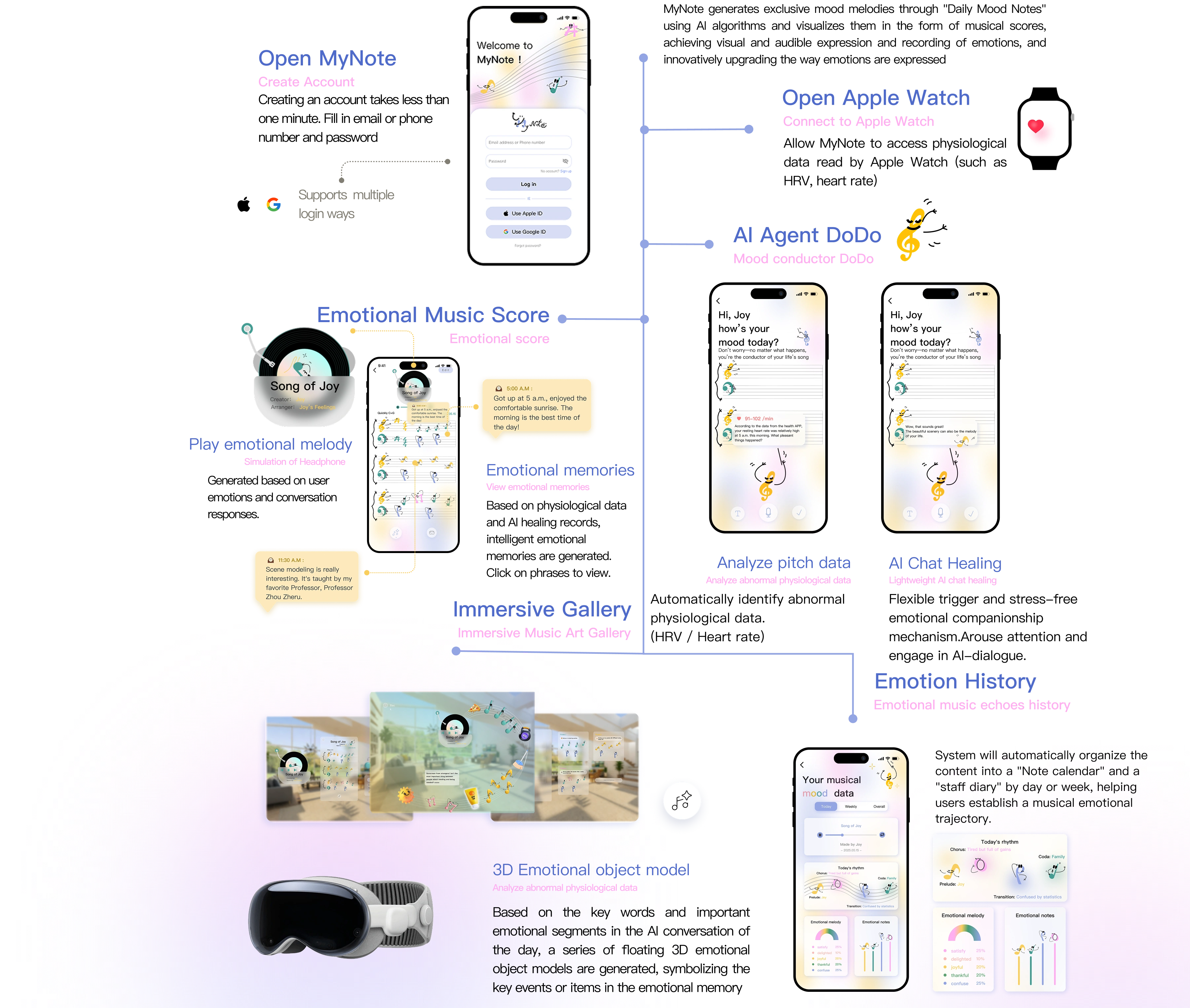
A closer look
Beyond the phone
The spatial experience gives visual and sonic elements a surrounding presence. A shared visual language connects a brief mobile check-in with a more immersive moment of listening.
04 / Design & development
The visual identity grows from musical notation: a personified “M” and expressive note characters connect MyNote to the idea of a personal score.
The team’s technical exploration connects SwiftUI, HealthKit, Core ML, AudioKit, and RealityKit with a FastAPI and Firebase/Firestore backend. My contribution centred on the concept, research, product analysis, UI/UX, visual materials, and front-end design. Local musical feedback and asynchronous generation were explored to balance responsiveness with richer output.
The architecture boards document several model configurations and experiments. They describe the development process rather than one fully validated production pipeline.
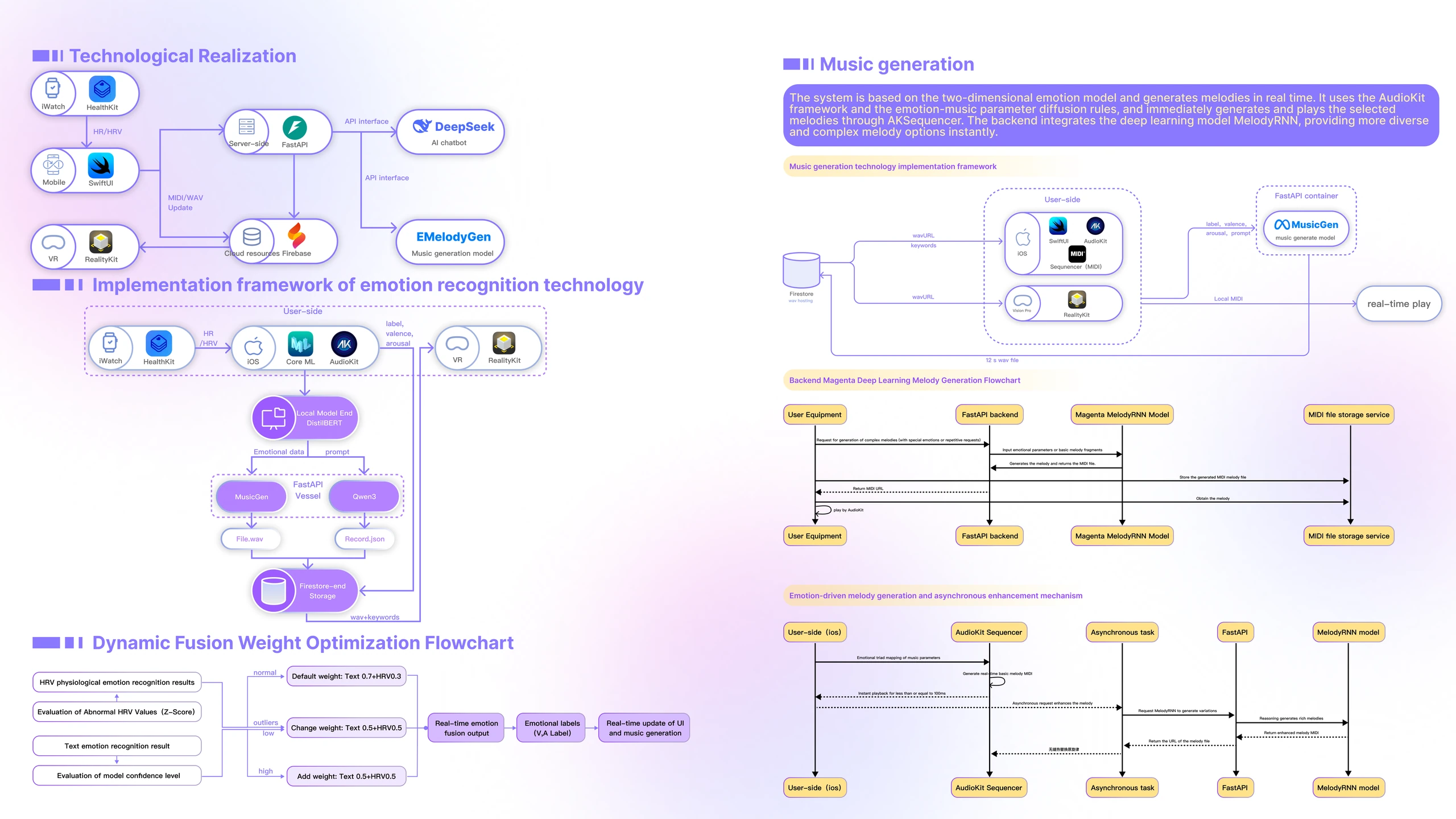
A closer look
05 / Recognition & sharing
MyNote received a National Second Prize in the 2025 Mobile Application Innovation Competition and a National Third Prize at UXDA. I also joined the competition’s project showcase workshop.
China Collegiate Computing Contest
Mobile Application Innovation Competition
17th User Experience
Design Award
The showcase offered a place to share the project and continue developing the experience.
Next inquiry
What makes an emotional representation feel personal?
Further work would explore how people interpret the connection between a mood and its musical or visual response over longer-term use.For a complete reading
Every board, in full.
Open a board to explore the details.