01
Encounter the environment
Projection and structure introduce the moth as part of a surrounding system.
Interactive Installation, Creative Coding, Generative AI, Physical Computing
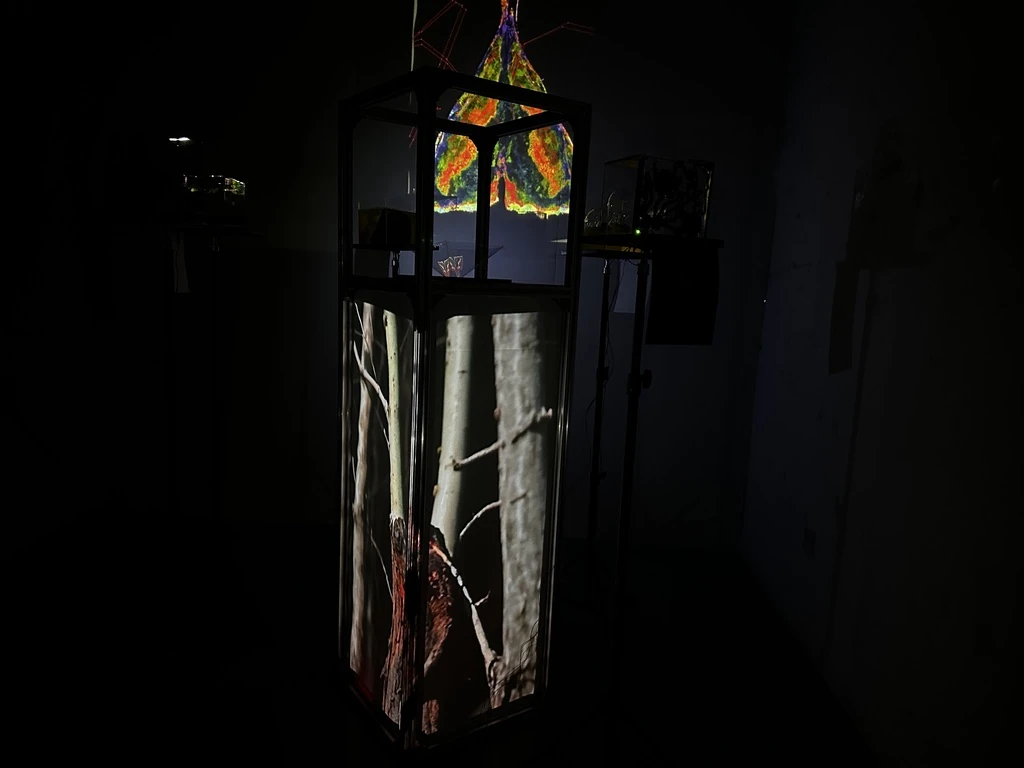
01 / The encounter
Interactive installation
A moth changes as the world around it changes. The Great Acceleration turns this relationship into an encounter with colour, sound, light, temperature, and movement.
Inspired by the industrial melanism of the peppered moth, I built a physical and generative installation in which visitors can intervene, observe a response, and recognise themselves as part of the environment.
The film shows the scale, material presence, and interaction of the working installation.
02 / Framing the question
The research connects human-driven environmental change with the difficulty of perceiving effects that are distributed or delayed. The design question became: how can an individual action feel connected to a larger ecological system?
Historical references, audience questions, and research synthesis informed an experience that can be approached through observation before participation.
03 / The experience
The experience moves between the scale of an environment and the scale of an individual organism. Visitors first meet the installation, then explore its sensing points, and finally look closely at the changing holographic moth.
Projection and structure introduce the moth as part of a surrounding system.
A physical intervention at the sensing points becomes an input to the visual system.
The reflective display offers a close view of the resulting form.
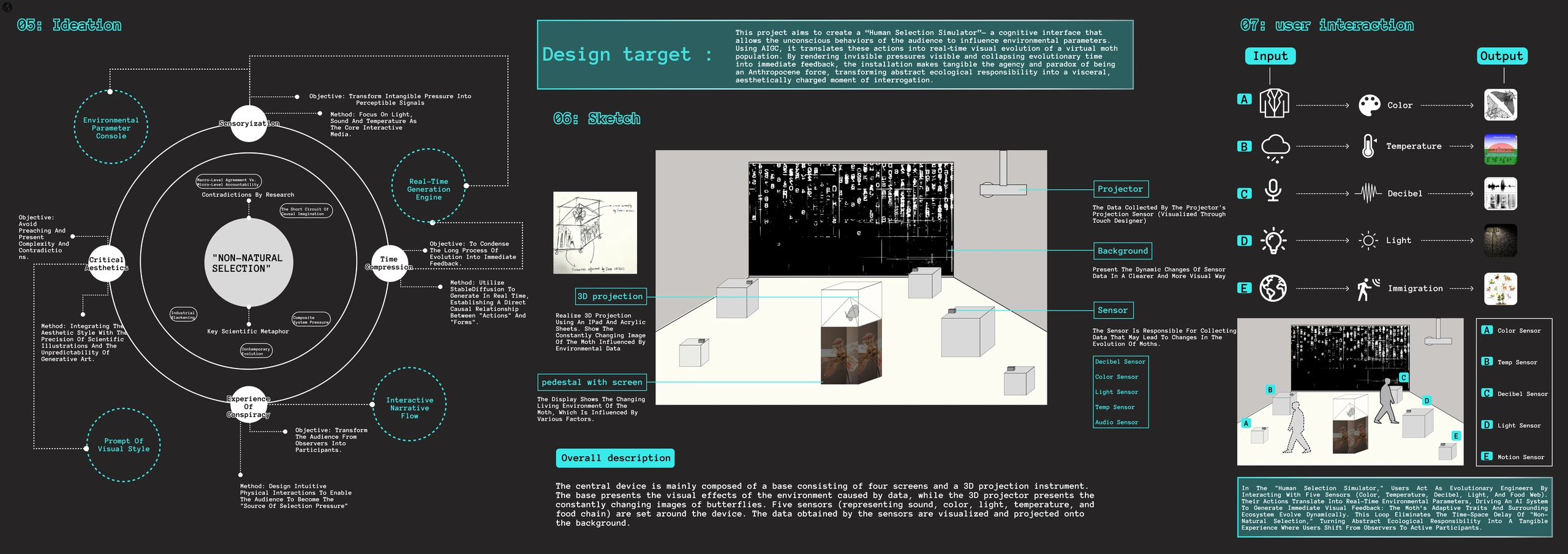
A closer look
04 / Making it work
Arduino preprocesses the physical sensor readings. TouchDesigner maps these values into environmental states and drives the real-time visual workflow, with StreamDiffusion explored for generative imagery. The node network makes the relationship between input, processing, and visual response explicit.
The moth is an artistic interpretation of ecological change. Its transformation is intended to provoke reflection rather than predict biological evolution.
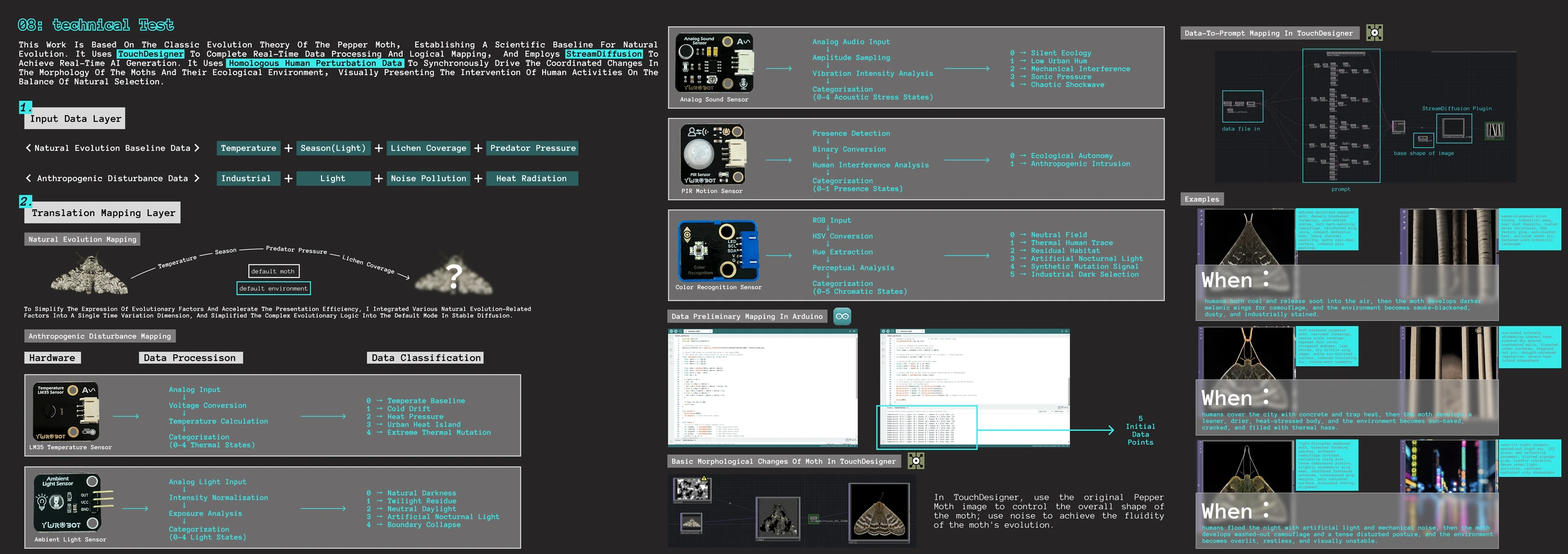
A closer look
05 / From structure to encounter
I developed the research, spatial concept, sensing setup, and generative visual system. Assembly involved bringing a fabricated frame, sensors, projection, and a reflective display into one working installation.
Reflection
A response becomes meaningful when a visitor can connect it to their own action.
A next study would examine how visitors interpret that relationship and its ecological message.For a complete reading
Every board, in full.
Open a board to explore the details.